
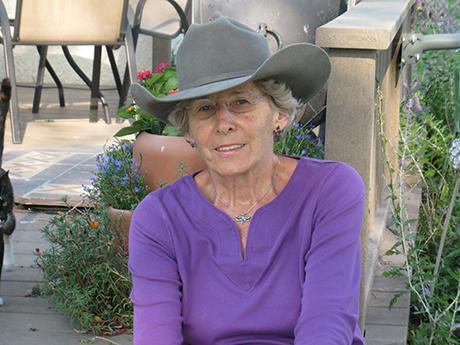
A B Cox is a longtime rancher, cowboy philosopher, and neighbor down in my home country. He recently wrote about how to tell if you’re “from here,” Here are more thoughts in that vein.
You aren’t from here if you don’t know that “cowboy” can be a verb as in, “don’t cowboy those critters so much,” or that females can also be called cowboys, albeit that they have to “earn their spurs” first.
You aren’t from here if you don’t know the difference between nine-wire, baling wire, and telephone wire. Or that hay is baled, not bailed. You bail water out of a boat.
Speaking of boats, if you haven’t a Navy veteran in your family, you won’t know that a boat is something you can put on a ship. If you’re from here, you know that a pickup is something you can put on a truck.
If you’re from here, you’ll drive on a country road called a blacktop, not asphalt. But if you work for the county, asphalt will be used.
If you’re from here, you know that cattle eat cake. People aren’t particular; it’s all dessert.
If you’re from here you know the difference between a handyman and a hired man, and that hay waddies are a whole other breed. You know that hay grows in a meadow but when the hay is harvested you go to the hayfield. Otherwise, a field is where corn and wheat are planted.
You know that “mill” means windmill, and that “saddle” and “draw’ can refer to the terrain of the Sandhills. We don’t have buttes, mesas, and arroyos but we know what the words mean. We don’t have Blue Northers or Nor-Easters, just plain old blizzards.
You’re not from here, if you pronounce the name of a certain Nebraska town as Norfolk. Natives know that it’s NORFORK, because of being on the North Fork of the Elkhorn River. Somebody in DC got it wrong when the post office was registered. I’ve also heard radio announcer say BEE-atrice. It’s Be-AT-rice, as any resident will tell you.
Those humorous, but true, observations are one side of the coin. The other side isn’t so funny. To lifelong Sandhillers, you’ll never be from here if you weren’t born here, and preferably have three generations in the graveyard. It helps if you married into it but someone will always recall that the spouse was from some other place. It can be questionable if you grew up here, left, and then came back. In any controversy, your loyalty will be suspect. Who knows if you got contaminated with some philosophy that doesn’t fit with local traditions?
We wear the badge of Sandhills proudly, claim to be neighborly, but tend to hold at arms-length those who are transplants. I’m not proud of this, and will get lots of hate mail disclaimers, but in the words of some natives who have made a life elsewhere, “I’d like to retire in the Sandhills but I can’t live there anymore. The people won’t let me fit in.”
In the words of a transplant who has lived half her life here and loves the place, “Maybe belonging is not about where we begin, but what has shaped us. Perhaps belonging is less about origin and more about imprint. At what point does a stranger simply belong?
Meet me here next week and meanwhile do your best to remember that we all want to belong.